

Services
Luxury Chauffeur vs. Rideshare: Where the Real Difference Is
Training, vetting, vehicle standards, insurance coverage, and the seven other dimensions where a chauffeur service is a different category entirely.
June 13, 2026 · 6 min read · Black Swan Editorial
Chauffeur service and rideshare are usually compared as a price difference. They are actually a category difference. The price gap is real, but it reflects a different product built for a different use case. Eleven dimensions show where the lines actually are.
1. Driver tenure
Rideshare median driver tenure is under a year. Many drivers work part-time across two or three platforms simultaneously. The driver picking you up may have been driving for two weeks or two years; the app does not distinguish.
Chauffeur tenure with premium operators averages 5 to 10 years per driver. Chauffeur is the primary profession, often unionised, with benefits and career progression. The chauffeur who drives you knows the city, the routes, and the regular clients.
2. Vetting depth
Rideshare runs an initial background check at sign-up. Most platforms re-check annually. The vetting is automated and minimal: criminal record, motor vehicle record, no major incidents.
Premium chauffeur operators run criminal and motor vehicle background checks at hire and annually, drug-test on a regular cadence, and verify employment history. Service training covers airport protocol, executive discretion, defensive driving certification. The hiring process takes weeks; the average rideshare onboarding is days.
3. Vehicle standards
Rideshare vehicles range from 2018 economy sedans to brand-new luxury. The cabin standards vary: cleanliness, mechanical state, amenities, smell of the last passenger's vape. The vehicle that arrives is a function of which driver picks up the ride.
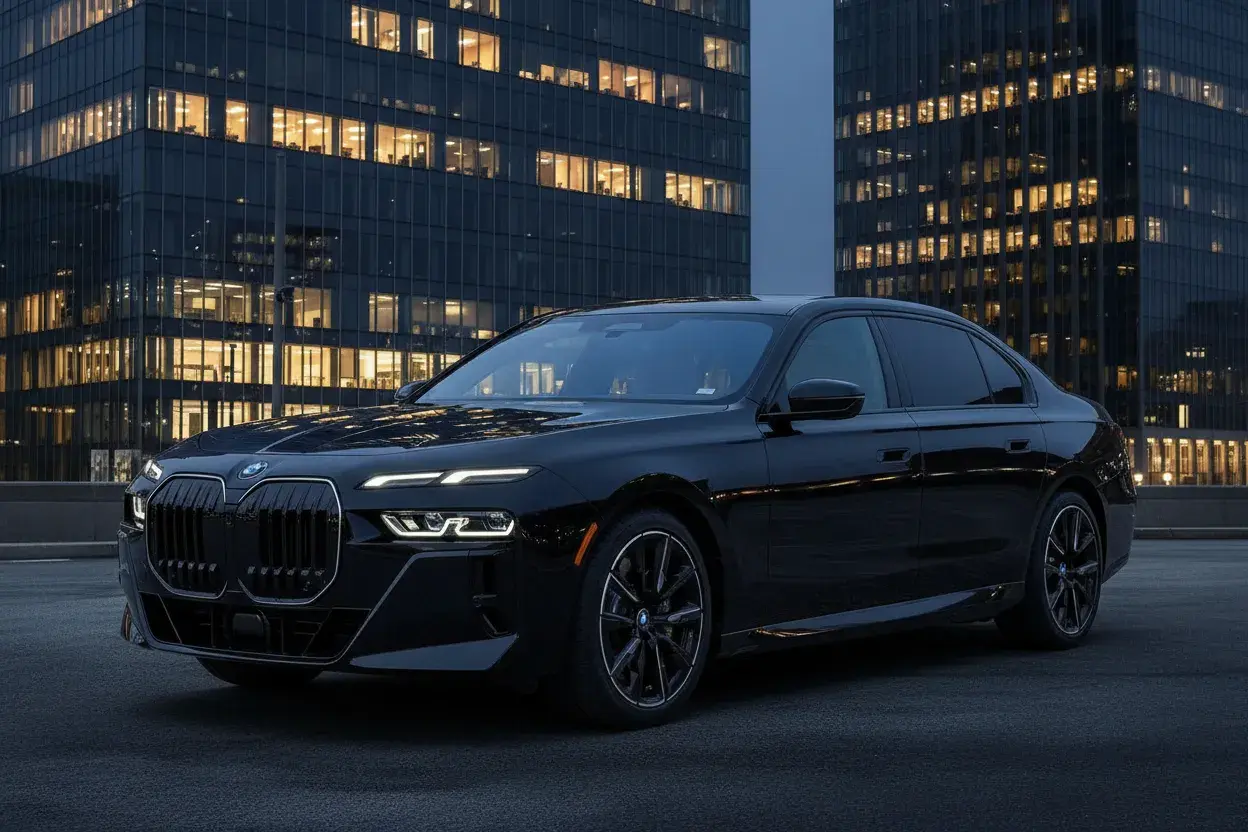
A chauffeur fleet is curated. Black Swan operates BMW 740i executive sedans, Cadillac Escalade ESV SUVs, Mercedes Sprinter executive vans, cycled every 3 to 4 years. Daily pre-trip walkaround. Monthly mechanical service. Detailed between trips. The vehicle that arrives is the one you booked.
4. Insurance coverage
Rideshare carries roughly $1 million in liability during active rides. Personal vehicle insurance fills gaps when the app is off. Between rides and during off-duty time the coverage can be thin. In a serious incident, the available coverage is often less than what a corporate or HNW passenger needs.
Commercial chauffeur fleets carry $1.5 to $5 million per vehicle in commercial auto liability, with passengers named as additional insureds on request. Workers compensation covers the chauffeur. Garage liability covers vehicle storage. Coverage is layered, professional, and continuous.
5. Pricing predictability
Rideshare pricing changes by the minute. Surge multipliers trigger at the moments you most need a ride. The price you see at booking is rarely the price at pickup.
Chauffeur quotes are fixed at booking. Hourly with a minimum or point-to-point flat rate. Fuel, tolls, gratuity, and standard wait included. No surge. No weather pricing. No event pricing. The number on the contract is the number on the invoice.
6. Service quality consistency
Rideshare quality varies by driver. The same brand can deliver a five-star experience and a two-star one in the same week. The variance is the product.
Premium chauffeur operators standardise the experience. Trained on greeting, baggage handling, route briefing, in-cabin conduct (silent unless addressed), drop-off coordination. The chauffeur in Cincinnati delivers the experience the chauffeur in LA delivers.
7. Account management
Rideshare is transactional. Each ride is independent. No account manager, no SLA, no escalation path beyond app support that responds in 24 to 48 hours.
Corporate chauffeur programs include a named account manager who handles bookings, billing questions, traveller policy, and incident escalation. 24/7 dispatch answers the phone live. Issues get resolved in minutes, not days.
8. Multi-city consistency
Rideshare quality varies by city. The driver pool in San Francisco operates to different standards than the driver pool in Atlanta. Vehicle classes differ. The same booking gets a different product in different markets.
A national chauffeur operator runs the same standard in every city. Same insurance minimums, same vehicle classes, same booking system, same billing. One phone number across 18 US cities for Black Swan; the experience matches the brand.
9. Discretion
Rideshare drivers are evaluated on conversation rating. Some are silent; many are not. Confidential conversations are not viable. Phone calls are overheard. Screens are visible.
A chauffeur is trained on discretion as a professional standard. Silent unless addressed. Aware of which conversations to ignore. Trusted with information by default. For executive, family, or sensitive use cases, this is not a preference; it is a requirement.
10. Vehicle as workspace
A rideshare cabin is rarely a productive workspace. Conversation, radio, route uncertainty, the acoustic environment of an economy sedan.
A chauffeur vehicle is designed as a mobile office. Quiet cabin, privacy partition or rear separation, Wi-Fi at the seat, charging ports, tinted windows. A 45-minute commute becomes 45 minutes of productive work.
11. When rideshare is the right answer
For short urban trips, one or two passengers, no luggage, no time pressure, no expense account, no confidentiality concern: rideshare wins on price and chauffeur is overkill. Most personal trips fall here.
For airport runs, multi-stop bookings, group transportation, late-night returns, client-facing visits, executive travel, family with luggage, or any trip where punctuality matters: chauffeur is a category leap, not a luxury upgrade. Both products have a use case. Match the product to the trip.
Frequently asked
How much more does chauffeur cost than rideshare?
For a typical airport run, chauffeur is 2 to 3 times rideshare base fare. Once surge pricing hits rideshare during peak periods, the multiple drops to 1.2 to 1.5. For corporate travel where the cost is expensed, the difference often disappears entirely when you factor in productive in-vehicle time and reduced risk exposure.
Can a chauffeur service operate in multiple cities for me?
Yes, if you choose a national operator. Black Swan operates in 18 US cities with one booking line, one account, and one billing system. Same vehicle standards and chauffeur vetting in every market.
Do I need to tip a chauffeur?
Most premium chauffeur quotes include gratuity (15 to 20 percent of base) in the all-in rate. Confirm at booking. If gratuity is not included, 18 to 20 percent is standard. No surprise tip prompts at drop-off.
Is chauffeur safer than rideshare?
Quantifiably yes on insurance coverage (3 to 5x rideshare per-vehicle liability), driver vetting (longer tenure + annual re-vetting + drug testing), and vehicle maintenance (documented inspection cadence). The risk reduction matters most for high-profile passengers, family transportation, and any context where an incident has outsized consequences.
Ready when you are.
Black Swan Executive Chauffeurs across 18 US cities. Available 24/7.
Explore related
Pages on this site that connect to what you just read.
More from Services
Services
Welcome to the Journal
Field notes on chauffeur work, from the people who do it. Twelve articles in production. Here is the order they're coming in.